| [栏目图片] |
Wetland Ecological Security and Restoration Team from the College of Material and Chemical Engineering Achieves New Progress in a Series of Research |
|||
|
|
|||
|
|||
|
Recently, the Wetland Ecological Security and Restoration Team from the College of Material and Chemical Engineeringat Zhengzhou University of Light Industry (ZZULI) achieved a series of important research advances in fields such as wetland ecological protection, water pollution control, and ecological restoration. The related results have been successively published in the international authoritative journals Journal of Hazardous Materials (CAS Q1 Top Journal, IF = 10.6) and Bioresource Technology (CAS Q1 Top Journal, IF = 8.2), yielding systematic research outputs that span from the mechanistic resolution of ecological risks of emerging contaminants and fundamental theoretical innovation in microbial nitrogen and phosphorus removal to the optimized application of constructed wetland systems, fully demonstrating the team'sscientific research strength in continuous innovation in the fields of environmental ecology and water treatment. Article 1:
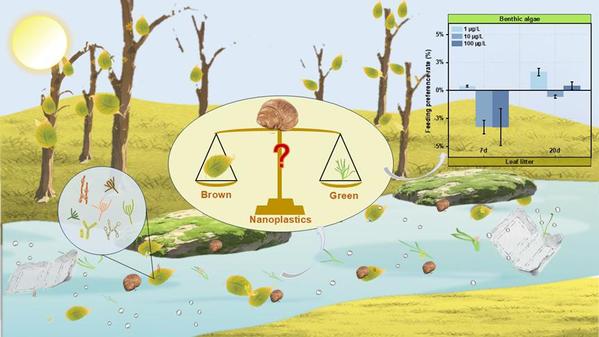
In the research on the ecological risk of emerging contaminants, the team published a research paper entitled "Nano-polystyrene influences energy flow dynamics in stream brown-green food chains: Evidence from feeding preference shifts of a river snail" in Journal of Hazardous Materials. Using the stream brown–green food web as a model, the study revealed a novel mechanism by which nano-polystyrene disrupted the coupling of brown and green food chains and energy flow by altering the nutritional quality of basal resources and the adaptive behaviors of consumers. This provides an important theoretical basis for the ecological risk assessment of nanoplastics and the protection of stream ecosystems. Professor Du Jingjing from the College of Material and Chemical Engineering is the firstandcorresponding author. This study was supported by the General Program of the National Natural Science Foundation of China, the Natural Science Foundation for Excellent Young Scholars of Henan Province, and the Program for Science & Technology Innovation Talents in Universities of Henan Province, among other projects. Journal article link:https://doi.org/10.1016/j.jhazmat.2026.142347 Article 2:
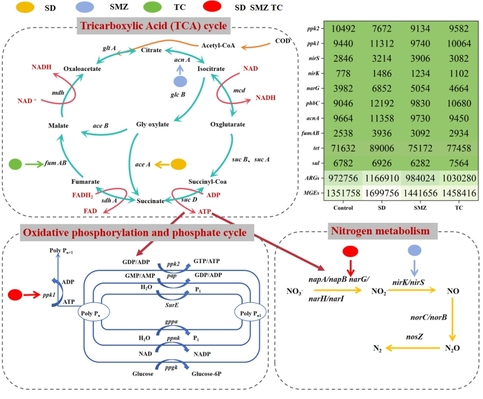
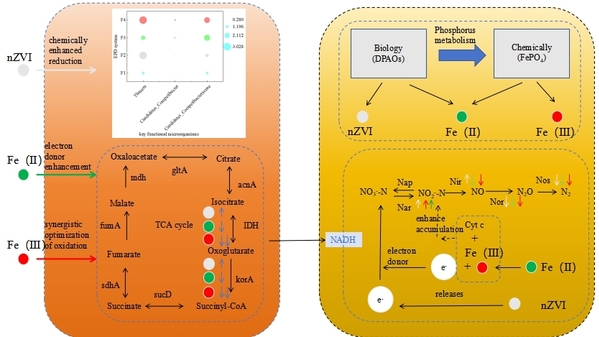
Focusing on the key scientific issues in biological nitrogen and phosphorus removal from wastewater, the team has achieved two consecutive important breakthroughs. It published a research paper entitled "Antibiotic-driven mechanisms in endogenous partial denitrification (EPD): Nitrite accumulation, microbial adaptation, functional gene responses and resistance gene proliferation" in Journal of Hazardous Materials. This study systematically elucidated the mechanism by which sulfonamide and tetracycline antibiotics affect the operation of the endogenous partial denitrification (EPD) system, microbial adaptation, and the propagation of antibiotic resistance genes. It revealed the intrinsic link between nitrogen transformation metabolic regulation and environmental risk driven by antibiotics, thereby providing theoretical support for the optimization of biological wastewater treatment technologies under antibiotic contamination. Associate Professor Jin Baodan from the College of Material and Chemical Engineering is both the first author and co-corresponding author. Article 3:
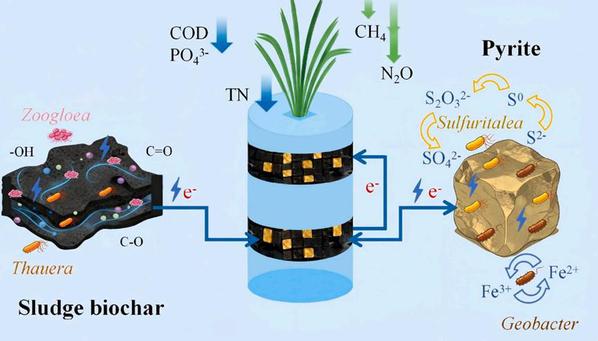
Article 4:
This research was supported by the General Program of the National Natur al Science Foundation of China and the Program for Science & Technology Innovation Talents in Universities of Henan Province, among other projects. Journal article link: https://doi.org/10.1016/j.biortech.2026.134468 |
|
Copyright © 2014 Zhengzhou University of Light Industry, China. All Rights Reserved. Add: No.136 Ke Xue Avenue,Zhengzhou,HenanProvince,PRC. Zip Code:450000 It is recommended that you use IE7 and above version of the browser to visit the web site. |